




Key Takeaways
- LOVB built America’s largest youth volleyball system before launching its professional league, creating both a talent pipeline and built-in fan base
- The inaugural LOVB Finals (April 10-13, 2025) represents a watershed moment for professional women’s volleyball in the US
- LOVB’s “ground-up” business model addresses why previous professional volleyball leagues have failed in the US market
- Strategic partnerships with ESPN and alignment with major youth tournaments create visibility and clear pathways for aspiring professional players
- With 19 Olympians from 20+ countries competing, LOVB has successfully attracted elite global talent while developing domestic players
Introduction
For decades, volleyball in the United States has existed as a paradoxical anomaly in the sports landscape: one of the most widely played youth sports, dominating at the collegiate level, yet perpetually unable to establish a sustainable professional league. This disconnect has forced generations of elite American volleyball players to choose between abandoning their sport after college or pursuing professional careers overseas, far from their fans, families, and the market that developed their talents.
The inauguration of the League One Volleyball (LOVB) Finals, set for April 10-13, 2025, at Louisville’s KFC Yum! Center, represents far more than just another tournament. It stands as the culmination of a fundamentally different approach to building a professional sports league—one that may well revolutionize how women’s sports leagues develop in the future.
What makes LOVB’s approach so revolutionary? While conventional wisdom dictates building professional leagues from the top down, LOVB inverted the model. Founded in 2020, LOVB spent years methodically building the country’s largest youth volleyball ecosystem—58 clubs across 27 states supporting over 19,000 athletes—before launching its professional league. This strategic patience created not just a talent pipeline, but a built-in, passionate fan base with direct connections to the professional teams.
As a sports business analyst who has studied numerous league launches across multiple continents, I can confidently state: LOVB’s model represents one of the most innovative approaches to professional sports development in the last decade. This article examines why this approach matters, how it addresses historical challenges in women’s professional sports, and what other emerging leagues can learn from LOVB’s revolutionary strategy.
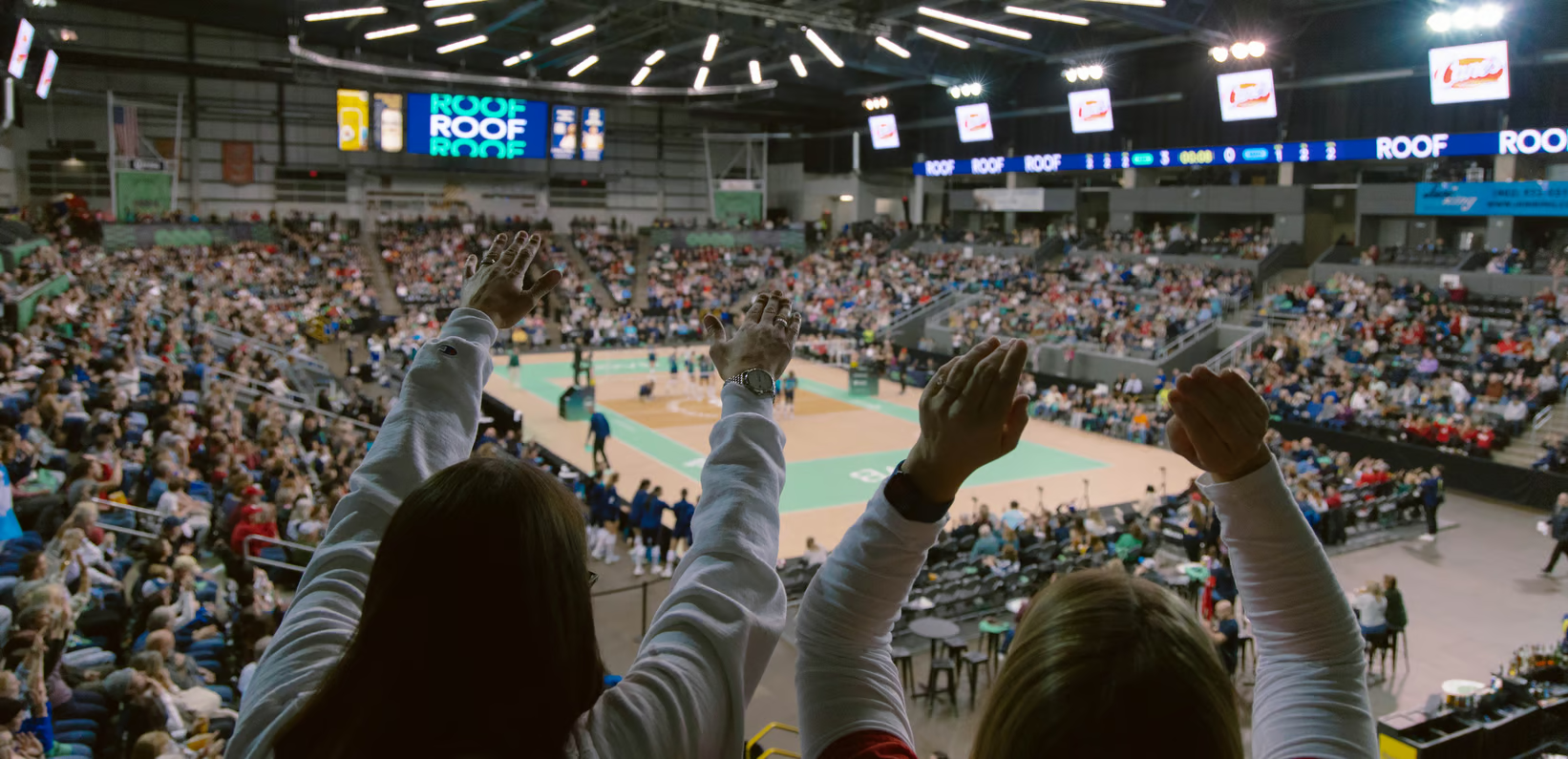
The Paradox of American Volleyball: Popular Yet Professionally Underdeveloped
The Missing Link Between Collegiate Success and Professional Careers
The numbers have always been paradoxical. In 2023 alone, over 470,000 high school girls played volleyball in the United States—surpassing both basketball and softball in participation. Volleyball consistently ranks among the top three most popular women’s collegiate sports, with packed arenas and growing television audiences for the NCAA tournament. Yet until now, this massive foundation led to a professional dead end domestically.
For perspective, consider that the United States has produced some of the world’s most dominant volleyball teams, with the women’s national team earning multiple Olympic medals and world championships. These elite athletes developed in the American system, only to find themselves without a domestic professional league to sustain their careers or grow their sport’s visibility.
Previous attempts at professional women’s volleyball leagues in the US have faltered for consistent reasons: lack of sustainable fan base, disconnection from grassroots development, insufficient media presence, and business models that prioritized immediate returns over long-term ecosystem building. The Professional Volleyball Federation, Major League Volleyball, and other previous attempts all followed conventional sports league development patterns—and all ultimately failed to achieve sustainability.
The consequences extended beyond the athletes themselves. The volleyball industry—from equipment manufacturers to facility developers—lacked the showcase that a premier professional league provides. Youth players developed without visible pathways to professional careers, diminishing both aspirational motivation and long-term retention in the sport.
LOVB’s Revolutionary Business Model: Building from the Ground Up
Creating America’s Largest Youth Volleyball Ecosystem
LOVB’s approach began with a counterintuitive insight: don’t start at the top; build the foundation first. Rather than launching a professional league immediately, LOVB focused first on building what has become America’s largest youth volleyball system.
This wasn’t merely a preliminary step—it was a fundamental business strategy. By establishing and connecting 58 volleyball clubs across 27 states, LOVB created an integrated development ecosystem serving over 19,000 young athletes. This network accomplished several critical objectives simultaneously:
- Established direct connections with the most engaged volleyball families across the country
- Created a consistent development methodology that improved player progression
- Built brand recognition and loyalty years before the professional league launched
- Generated revenue and operational expertise while developing the professional framework
- Identified emerging talent directly within their own system
LOVB effectively became both a talent developer and the ultimate beneficiary of that development—vertical integration applied to sports in a way few organizations had previously attempted. By controlling multiple levels of the volleyball ecosystem, LOVB created sustainability advantages that previous league attempts never achieved.
Establishing Clear Pathways to Professional Careers
With the youth foundation established, LOVB strategically designed visible pathways connecting young players to professional opportunities. This connectivity manifests most clearly at the inaugural LOVB Finals, deliberately scheduled alongside the JVA World Challenge—one of the country’s premier youth volleyball tournaments.
This alignment creates a powerful visual: thousands of young volleyball players competing during the day, then watching their professional counterparts—many of whom developed through similar pathways—compete on the same courts in the evenings. The message is unmistakable: this could be you.
The pathway design extends beyond symbolic alignment. LOVB created structured development programs connecting their youth clubs to the professional teams, including:
- Elite development academies in each professional team market
- Coaching methodologies shared between youth and professional programs
- Exhibition matches and clinics connecting youth players with professionals
- Scouting and recruitment systems identifying top talent within the LOVB youth ecosystem
For the first time, an American volleyball player can visualize and pursue a complete development journey—from youth clubs through college and into a domestic professional career—all within a single, integrated system.
Inside the Inaugural LOVB Finals: A Watershed Moment for Women’s Sports
Elite Competition: Olympic Talent Takes Center Stage
The inaugural LOVB Finals represents an extraordinary concentration of elite volleyball talent. Among the competitors are 19 Olympians and national team veterans from over 20 countries—a testament to LOVB’s ability to attract world-class talent from the beginning.
The six teams competing in Louisville feature some of volleyball’s most recognized names:
- Two-time Olympic medalist Jordan Thompson dominates for LOVB Houston with her imposing 6’4″ frame and devastating offensive arsenal
- Three-time Olympic medalist Kelsey Cook leads LOVB Atlanta with her exceptional all-around game
- LOVB Austin’s Chiaka Ogbogu has established herself as the league’s premier blocker
- Salt Lake’s Manami Kojima, widely regarded as one of the world’s elite liberos, routinely converts seemingly impossible defensive plays
- Four-time Olympic medalist Jordan Larson brings her legendary all-around skills to LOVB Omaha
- LOVB Madison features the powerful left-handed attacking of Olympian Annie Drews Schumacher
The competition format creates maximum drama: quarterfinals on April 10th, semifinals on April 11th, and the championship match on April 13th. The single-elimination format ensures every point matters, with an entire season’s work at stake in each match.
Strategic Broadcast Partnership with ESPN Expands Visibility
LOVB’s media strategy reflects the same strategic foresight as its developmental approach. The league secured ESPN as its broadcast partner, with the Finals featured across ESPN’s platforms:
- Quarterfinals streaming on ESPN+ (April 10th, 4:30pm ET and 7:00pm ET)
- Semifinals split between ESPN2 and ESPN+ (April 11th, 6:30pm ET and 9:30pm ET)
- Championship match broadcast on ESPN2 and streaming on ESPN+ (April 13th, 4:00pm ET)
This multi-platform approach balances traditional television reach with the streaming flexibility increasingly demanded by younger audiences. The ESPN partnership provides not just distribution but institutional credibility—positioning LOVB alongside established leagues in the sports ecosystem.
The broadcast strategy extends beyond the games themselves. LOVB has developed content highlighting player journeys, technical aspects of the sport, and connections between youth and professional volleyball—educating new fans while deepening engagement with existing volleyball enthusiasts.
The Business Case for LOVB’s Approach to Professional Sports
Addressing the Sustainability Challenges of Women’s Professional Leagues
Women’s professional sports leagues face well-documented sustainability challenges. From the WNBA to the NWSL, even successful leagues have navigated difficult financial terrain. LOVB’s model directly addresses several critical sustainability factors:
- Fan Development: By connecting directly with youth volleyball families, LOVB created an immediate audience with pre-existing emotional investment in the sport.
- Venue Sizing: Rather than attempting to fill massive arenas immediately, LOVB selected appropriate venues matching their expected attendance—creating energetic atmospheres while controlling costs.
- Multiple Revenue Streams: Unlike leagues dependent solely on professional game revenues, LOVB generates income across its youth ecosystem, creating financial stability during the professional league’s growth phase.
- Sponsor Alignment: LOVB offers sponsors access across multiple segments—from youth tournaments to professional broadcasts—creating more valuable, integrated partnerships than standalone professional leagues can provide.
- Talent Investment Return: By developing players through their own system, LOVB captures more return on development investment than conventional leagues separating youth and professional levels.
Creating Value Through Vertical Integration in Sports
Vertical integration—controlling multiple stages of an industry’s value chain—has proven successful across numerous business sectors. LOVB has applied this principle to sports more comprehensively than perhaps any organization before it.
The value created through this integration manifests in several ways:
- Operational Efficiencies: Shared resources, facilities, and administrative functions between youth and professional programs
- Brand Consistency: Unified messaging and positioning across all levels of the organization
- Data Advantages: Comprehensive player development information from youth through professional levels
- Talent Optimization: Ability to identify and develop players specifically suited to LOVB’s playing style and systems
- Market Intelligence: Direct connection to volleyball consumers across multiple segments
This integration creates competitive advantages that extend beyond any individual component of the organization. While other leagues might excel at either youth development or professional operations, LOVB’s integration of both creates systemic advantages difficult for competitors to replicate.
Future Implications: What LOVB’s Success Means for Women’s Sports Business Models
Lessons for Other Women’s Professional Leagues
LOVB’s approach offers valuable lessons applicable across women’s sports:
- Patience in League Building: LOVB spent years developing its foundation before launching professionally—a contrary approach to the “launch fast” mentality that has undermined many leagues.
- Connected Ecosystems: Rather than viewing youth sports as separate from professional leagues, LOVB demonstrates the value of connecting these components within an integrated system.
- Strategic Scheduling: Aligning professional events with youth tournaments creates natural audience overlap and visible pathways for aspiring athletes.
- Technological Integration: LOVB has leveraged technology to connect its ecosystem, from training applications to performance analytics shared across youth and professional levels.
- Community Ownership: By establishing deep connections within volleyball communities before launching professionally, LOVB created stakeholders rather than merely spectators.
These principles could transfer to women’s basketball, soccer, hockey, and numerous other sports seeking sustainable professional models. The key insight is replacing the traditional top-down league development approach with patient ecosystem building from the ground up.
Long-term Growth Potential and Investment Outlook
From an investment perspective, LOVB represents a compelling case study in creating sustainable value in women’s sports. The organization has attracted significant venture capital not despite its patience, but because of it—investors recognizing that LOVB’s foundation-first approach creates more sustainable long-term value than quick-launch alternatives.
Several growth vectors suggest LOVB’s potential trajectory:
- Geographic Expansion: The current six teams represent only a fraction of viable markets for LOVB teams
- International Development: The LOVB model could expand internationally, particularly in volleyball-passionate markets across Europe, Asia, and South America
- Content Diversification: Beyond game broadcasts, LOVB’s integrated ecosystem creates opportunities for training content, documentary series, and other volleyball-focused media
- Technology Platforms: LOVB’s development methodology could evolve into licensable technology platforms for volleyball development worldwide
- Facility Infrastructure: As the professional league expands, purpose-built venues could create additional revenue opportunities and asset appreciation
Conclusion: A New Blueprint for Women’s Professional Sports
The inaugural LOVB Finals represents far more than a championship tournament—it validates a revolutionary approach to building sustainable women’s professional sports leagues. By inverting the traditional development model, LOVB has addressed fundamental challenges that undermined previous attempts at professional volleyball in America.
For sports business professionals, league operators, and investors, LOVB offers a compelling alternative to conventional wisdom. Patient foundation building, vertical integration, and ecosystem development may require more time initially, but create substantially greater sustainability and growth potential.
As the first champions are crowned in Louisville, the true victory extends beyond any individual team. The LOVB model has created what generations of volleyball players, fans, and industry participants have long sought: a sustainable professional women’s volleyball league in America, built to last not just for years, but for decades.
For young players watching their professional counterparts compete under the bright lights of the KFC Yum! Center, the message is unmistakable: the path exists now. From youth clubs to professional glory, American volleyball players can finally pursue their dreams without leaving home—a transformation that will resonate throughout women’s sports for years to come.
Actionable Takeaways for Sports Industry Professionals:
- Reconsider traditional league launch timelines—patient foundation building may yield more sustainable results than rapid launches
- Explore vertical integration opportunities connecting youth and professional sports in your organization
- Align major professional events with youth competitions to create visible pathways and engaged audiences
- Develop technology platforms that connect different levels of your sports ecosystem
- Consider how venue selection, broadcast partnerships, and competition format can be optimized specifically for women’s sports rather than copying men’s league models
YSBR provides this content on an “as is” basis without any warranties, express or implied. We do not assume responsibility for the accuracy, completeness, legality, reliability, or use of the information, including any images, videos, or licenses associated with this article. For any concerns, including copyright issues or complaints, please contact YSBR directly.
via: FOS

