



Key Takeaways
• The IOC Young Leaders Programme demonstrates how major sports organizations can harness youth innovation to drive sustainable development goals through structured mentorship and project implementation
• Over 5,000 applications for 25 program positions highlight massive global demand for meaningful youth sports leadership opportunities
• Three-pillar commitment strategy covering health, education, and climate action creates replicable frameworks for youth sports organizations seeking measurable community impact
• Corporate partnership integration with Samsung and Visa showcases how brands can authentically engage with youth development through technology and financial inclusion initiatives
• Multi-stakeholder collaboration involving 300+ representatives from 100 organizations provides a blueprint for scaling youth sports impact through strategic alliance building
The Strategic Evolution of Youth Leadership in Global Sports Organizations
The International Olympic Committee’s Olympism365 Summit represents a fundamental shift in how major sports organizations approach youth development and community impact. Rather than treating young people as passive beneficiaries of sports programming, the IOC Young Leaders initiative positions them as active agents of change, capable of designing and implementing solutions to complex global challenges.
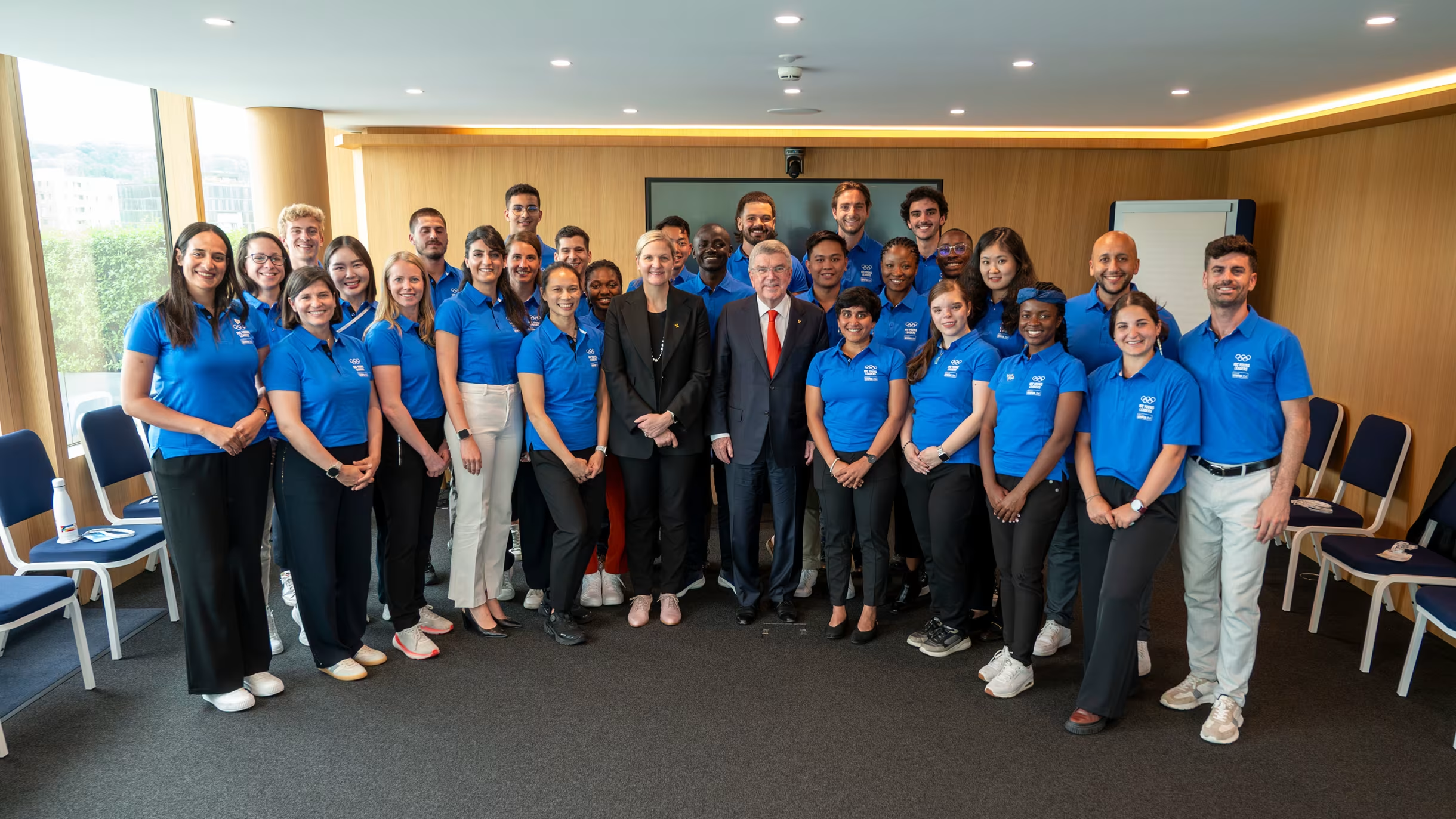
This approach reflects broader trends in youth sports business where organizations increasingly recognize that meaningful engagement requires authentic leadership opportunities rather than simply participation in structured activities. The program’s scope is impressive: 29 Young Leaders from diverse global communities working on projects spanning health and well-being, education and employment, and climate action initiatives.
The timing of this summit is particularly strategic, occurring at a moment when youth sports organizations worldwide are grappling with questions of relevance, impact measurement, and sustainable funding models. By positioning young leaders as solution designers rather than program recipients, the IOC creates a framework that other youth sports organizations can adapt while building genuine community ownership of outcomes.
Program Structure and Strategic Framework Analysis
Multi-Pillar Development Approach
The IOC Young Leaders’ commitment to three distinct focus areas demonstrates sophisticated strategic thinking about comprehensive youth development. The health and well-being pillar addresses immediate community needs while building foundational skills. The education and employment component creates pathways for long-term economic mobility. The climate action focus prepares young leaders to address one of their generation’s defining challenges.
This multi-pillar approach provides several strategic advantages for youth sports organizations. It allows programs to address diverse community needs while maintaining coherent programming frameworks. It also creates multiple measurement opportunities, enabling organizations to demonstrate impact across various stakeholder priorities and funding requirements.
The geographic distribution of projects across 17 countries, from Argentina to Samoa, demonstrates scalability potential while respecting local context and needs. This balance between global coordination and local implementation provides a model that other international youth sports organizations might adapt for their specific contexts and resources.
Competitive Selection and Quality Assurance
The program’s selection process, which chose 25 Young Leaders from over 5,000 applications, creates significant competitive advantage through quality assurance and participant motivation. This selectivity ensures high-caliber participants while generating substantial interest and media attention for the broader IOC youth development mission.
For youth sports organizations, this approach demonstrates the value of maintaining rigorous standards while creating aspirational programming that attracts exceptional participants. The competitive element can drive innovation and excellence while building program prestige that attracts additional resources and partnerships.
Corporate Partnership Integration Strategies
Technology-Driven Development Partnerships
Samsung’s Solve for Tomorrow program integration illustrates how technology companies can authentically engage with youth sports development beyond traditional sponsorship models. By focusing on technology and sport as combined tools for social change, Samsung creates value alignment that serves both corporate objectives and youth development goals.
This partnership approach provides multiple benefits for youth sports organizations. It brings technological resources and expertise that many organizations lack internally. It also creates opportunities for young participants to develop digital literacy skills that enhance their long-term career prospects while addressing immediate community challenges.
The hackathon component demonstrates how corporations can contribute intellectual resources and innovation methodologies rather than simply providing financial support. This approach creates more sustainable value while building authentic engagement between corporate partners and youth participants.
Financial Inclusion and Youth Empowerment
Visa’s involvement in financial services accessibility challenges reflects growing recognition that youth sports development must address economic barriers and opportunities. By incorporating financial literacy and inclusion into sports-based programming, organizations can create more comprehensive development outcomes while building participant life skills.
This integration strategy addresses one of the most significant challenges in youth sports: ensuring that athletic participation translates into broader life opportunities. Financial literacy programming provides practical skills that complement athletic development while addressing real barriers to long-term success.
For youth sports organizations, this approach demonstrates how partnerships can enhance programming value while addressing fundamental community needs that extend beyond athletic development.
Measurement and Impact Assessment Frameworks
Commitment-Based Accountability Systems
The IOC Young Leaders’ specific commitments to deliver projects by the end of 2026 create clear accountability frameworks that other youth sports organizations can adapt. These time-bound commitments enable meaningful impact measurement while providing participants with concrete goal-setting experience.
The focus on underserved communities, displaced youth, and children with disabilities ensures that programming addresses populations most likely to benefit from structured development opportunities. This targeting strategy maximizes social impact while building programming around communities that often lack access to high-quality youth development resources.
The emphasis on gender equity in leadership, particularly regarding women and girls, addresses systemic barriers in sports leadership while building more inclusive programming frameworks. This approach creates long-term value for both individual participants and broader community development goals.
Multi-Stakeholder Collaboration Models
The summit’s inclusion of 300+ representatives from 100 organizations, including UN agencies, development institutions, and civil society groups, demonstrates sophisticated stakeholder engagement that amplifies impact beyond traditional sports organization capabilities.
This collaborative approach provides youth sports organizations with frameworks for building partnerships that enhance programming reach and effectiveness. By connecting with development professionals, educational institutions, and policy organizations, sports groups can create more comprehensive impact while accessing additional resources and expertise.
The integration with UN Sustainable Development Goals provides established measurement frameworks that enable youth sports organizations to demonstrate impact using internationally recognized standards. This alignment can enhance funding opportunities while ensuring programming addresses globally prioritized development challenges.
Innovation and Knowledge Transfer Systems
Peer-to-Peer Learning Integration
The “Been There, Learnt That” session between current and previous Young Leaders cohorts demonstrates effective knowledge transfer mechanisms that youth sports organizations can implement to enhance program sustainability and effectiveness.
This peer mentorship approach creates ongoing value for program alumni while providing current participants with practical implementation guidance. For youth sports organizations with limited staff resources, peer learning systems can enhance programming quality while building stronger participant networks and long-term engagement.
The approach also creates opportunities for continuous program improvement based on participant feedback and real implementation experience. This iterative development process can help youth sports organizations adapt programming to changing community needs and emerging best practices.
Technology Integration and Digital Innovation
The hackathon component illustrates how youth sports organizations can incorporate innovation methodologies that prepare participants for modern problem-solving approaches while addressing immediate community challenges.
Digital tool development creates opportunities for youth sports participants to build technical skills while creating solutions that can scale beyond individual communities. This approach demonstrates how traditional sports programming can evolve to address contemporary skill development needs while maintaining community impact focus.
For youth sports organizations, technology integration provides opportunities to enhance programming relevance while building participant capabilities that translate into career opportunities in growing technology sectors.
Scalability and Replication Considerations
Adaptable Framework Development
The IOC Young Leaders model provides frameworks that youth sports organizations of various sizes can adapt based on their resources and community contexts. The three-pillar approach can be scaled down for local organizations while maintaining strategic coherence and impact measurement capabilities.
Regional sports organizations might focus on single pillars initially while building capacity for more comprehensive programming over time. The competitive selection process can be adapted for smaller applicant pools while maintaining quality standards and participant motivation.
The corporate partnership integration strategies provide templates that local youth sports organizations can use to engage regional businesses and community organizations in authentic development partnerships that create mutual value.
Resource Requirements and Sustainability
Successful replication of this model requires careful attention to resource allocation and long-term sustainability considerations. The IOC’s established international presence and resources enable programming scope that smaller organizations might need to adapt for their contexts.
However, the fundamental approach of positioning young people as solution designers rather than passive participants can be implemented regardless of organizational size. This philosophical shift often requires more strategic thinking than additional financial resources, making it accessible to many youth sports organizations.
The emphasis on measurable commitments and timeline accountability creates frameworks that can help youth sports organizations demonstrate impact to current and potential funders, potentially enhancing long-term sustainability.
Future Implications for Youth Sports Development
Leadership Development Evolution
The IOC Young Leaders approach suggests that effective youth sports development increasingly requires authentic leadership opportunities rather than simply structured participation. Organizations that can successfully transition from service provision to leadership development may find themselves better positioned for long-term relevance and impact.
This evolution reflects broader changes in youth expectations and development best practices. Young people increasingly seek opportunities to contribute to solutions rather than simply receive services, making leadership-focused programming more attractive and effective.
Global-Local Integration Strategies
The program’s combination of global coordination with local implementation provides a model for youth sports organizations seeking to create broader impact while maintaining community relevance.
This approach enables resource sharing and best practice exchange while respecting local contexts and needs. For youth sports organizations, this balance can enhance programming effectiveness while building networks that provide ongoing support and development opportunities.
Conclusion: Building Sustainable Youth Leadership Through Strategic Sports Investment
The IOC Young Leaders Programme and Olympism365 Summit demonstrate how major sports organizations can create meaningful youth development impact while building sustainable programming frameworks that serve multiple stakeholder interests. The emphasis on youth as solution designers rather than passive recipients creates authentic engagement while addressing real community challenges.
For youth sports business professionals, this initiative illustrates the importance of strategic thinking about youth development that extends beyond traditional athletic programming. Organizations that can successfully integrate leadership development, community impact measurement, and strategic partnerships may find themselves better positioned for long-term success in an evolving youth development landscape.
The corporate partnership integration strategies provide templates for authentic business engagement that creates mutual value while advancing youth development goals. The emphasis on technology integration and innovation methodologies demonstrates how youth sports programming can evolve to address contemporary skill development needs while maintaining community impact focus.
The broader implications extend to youth sports organizations worldwide seeking to enhance their community relevance and impact. The IOC’s approach demonstrates how strategic framework development, competitive programming, and multi-stakeholder collaboration can create scalable models that address diverse community needs while building sustainable organizational capabilities.
YSBR provides this content on an “as is” basis without any warranties, express or implied. We do not assume responsibility for the accuracy, completeness, legality, reliability, or use of the information, including any images, videos, or licenses associated with this article. For any concerns, including copyright issues or complaints, please contact YSBR directly.
via: Olympics


