



Key Takeaways
• Strategic brand fusion: Nike’s multiyear partnership with Lego demonstrates how major sports brands are expanding beyond traditional athletic products to capture youth attention through innovative cross-industry collaboration
• Physical activity integration: The partnership prioritizes active play and movement through interactive experiences, aligning with CEO Elliott Hill’s strategy to refocus Nike around sports participation and physical activity
• Market expansion opportunity: By entering toy retail channels, Nike accesses new distribution networks and customer touchpoints that extend brand influence beyond traditional sports retail environments
• Experience-driven marketing: Legoland play areas and interactive events represent the evolution from product-focused to experience-driven youth sports marketing strategies
• Long-term youth development: The collaboration creates early brand connection opportunities that build lifelong relationships with young consumers through play-based sports introduction
The convergence of sports brands and toy manufacturers represents a strategic evolution in youth sports business development, where traditional industry boundaries dissolve to create innovative engagement models that serve multiple market objectives simultaneously. Nike’s groundbreaking multiyear partnership with Lego exemplifies this trend, demonstrating how established sports brands can expand their influence and market reach through creative collaboration with complementary industries.
This partnership launches at a critical moment in youth sports business development, as brands face increasing competition for young consumers’ attention while navigating changing play patterns and digital entertainment preferences. Traditional sports marketing approaches often struggle to compete with video games, social media, and other digital distractions that dominate youth attention spans. By integrating physical sports elements with beloved toy experiences, Nike and Lego create compelling hybrid offerings that bridge physical and imaginative play.
The collaboration also reflects broader industry recognition that early brand engagement significantly influences long-term consumer relationships and sports participation patterns. Young people who develop positive associations with sports brands through play experiences are more likely to maintain those relationships throughout their lives, creating valuable customer lifetime value that justifies substantial partnership investments and innovative product development initiatives.
Strategic Brand Partnership Analysis
Cross-Industry Collaboration Benefits
The Nike-Lego partnership demonstrates sophisticated strategic thinking about brand extension and market expansion opportunities within youth sports business development. Rather than competing directly with existing toy manufacturers or sports brands, both companies leverage their unique strengths to create products and experiences that neither could develop independently.
Nike brings athletic authenticity, sports culture credibility, and performance-focused design expertise to the partnership. These qualities enhance Lego’s traditional building and creative play offerings while introducing sports elements that encourage physical activity alongside imaginative construction play. The combination creates unique value propositions that differentiate both brands in their respective markets.
Lego contributes decades of expertise in creative play development, educational toy design, and child development understanding. These capabilities help Nike create age-appropriate products and experiences that resonate with young consumers while supporting healthy development patterns. The partnership also provides Nike with access to Lego’s established toy retail distribution networks and family-focused marketing approaches.
Market Access and Distribution Expansion
The partnership provides Nike with entry into toy retail channels that traditionally remained outside sports brand distribution strategies. Major toy retailers, specialty toy stores, and gift shops now become potential Nike touchpoints that reach families in different shopping contexts and decision-making moments.
This expanded distribution access is particularly valuable for reaching families who may not regularly visit traditional sports retailers or athletic specialty stores. Parents shopping for educational toys, birthday gifts, or holiday presents encounter Nike products in contexts where sports brands typically lack presence, creating new customer acquisition opportunities.
The toy retail environment also enables different pricing strategies and purchase motivations compared to traditional athletic retail. Families may be more willing to invest in premium-priced Lego sets that include Nike branding than they would be to purchase equivalent-priced athletic products, creating revenue opportunities that leverage both brands’ premium positioning.
Youth Engagement Strategy Evolution
Experience-Driven Marketing Development
Cal Dowers, Vice President of Nike’s Global Kids division, emphasized the partnership’s focus on comprehensive youth engagement: “At Nike, we are dedicated to fueling the potential of kids through play. Activating the full power of Nike, from athletes to our communities, helps us engage and inspire kids to experience the enjoyment of sport as a lifelong pursuit.”
This statement reflects a fundamental shift in youth sports marketing from product-focused approaches to experience-driven strategies that prioritize engagement, participation, and long-term relationship building. Rather than simply selling athletic products to young consumers, Nike is creating comprehensive play experiences that introduce sports concepts through familiar and enjoyable activities.
The Legoland play area activation from June 7-11 exemplifies this experience-driven approach. Visitors can design mini-figure athlete trading cards, build mini basketball jerseys, and take three-point basketball shots, combining creative construction with athletic skill development. These activities create positive sports associations while providing immediate gratification and achievement opportunities.
Physical Activity Integration Models
The partnership’s emphasis on movement and physical activity addresses growing concerns about youth sedentary behavior and declining sports participation rates. By embedding athletic elements within popular play activities, Nike and Lego create natural bridges between passive entertainment and active sports engagement.
This integration approach recognizes that many young people need gradual introduction to sports concepts rather than immediate competitive athletic participation. Building Lego sports scenes, creating athletic mini-figures, and engaging in light physical activities during play sessions provides low-pressure sports exposure that can develop into deeper athletic interest over time.
The physical activity integration also supports Nike CEO Elliott Hill’s strategic focus on refocusing the company around sports participation and physical movement. Rather than limiting this focus to traditional athletic products and experiences, the Lego partnership extends physical activity promotion into play contexts where children naturally spend significant time and attention.
Product Innovation and Development
Hybrid Product Category Creation
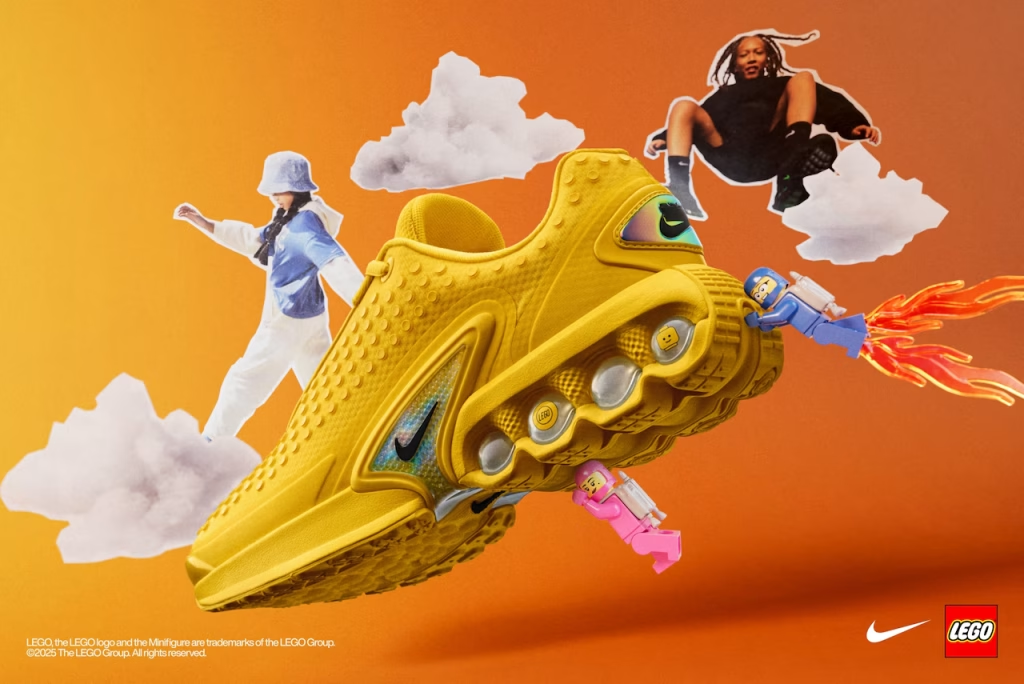
The Nike Dunk Lego set and Nike Air Max DN sneaker that resembles a yellow Lego brick represent innovative product category development that combines functional athletic design with creative play elements. These products create new market categories that traditional sports or toy industry analysis frameworks may not adequately capture.
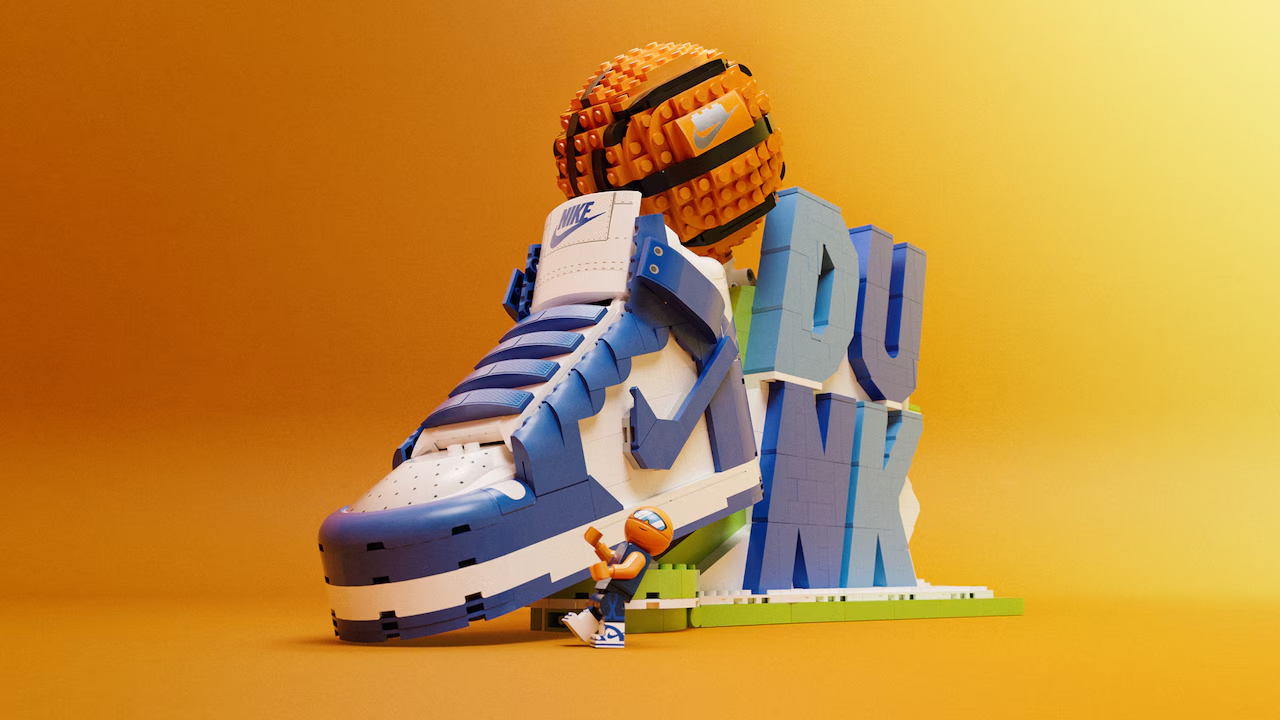
The 1,180-piece Nike Dunk Lego set with B’Ball Head minifigure demonstrates sophisticated product development that serves multiple play patterns simultaneously. Children can engage in traditional Lego construction activities while learning about sneaker design, athletic culture, and sports participation. The completed set serves as both display piece and continued play catalyst.
The August 1 release of Nike Air Max DN sneakers designed to resemble yellow Lego bricks creates functional athletic footwear that maintains visual connection to the toy partnership. This approach enables young athletes to wear products that reinforce their connection to both brands while providing legitimate athletic performance capabilities.
Design Philosophy Integration
Successful cross-industry product development requires careful integration of both partners’ design philosophies and quality standards. Nike’s performance-focused design approach emphasizes functionality, durability, and athletic capability, while Lego’s design philosophy prioritizes creativity, educational value, and safe play experiences.
The partnership products demonstrate successful integration of these different design approaches. The Lego Nike Dunk set maintains Lego’s high-quality construction standards and creative play potential while accurately representing Nike’s iconic sneaker design and athletic brand identity. Similarly, the Nike Air Max DN maintains athletic performance capabilities while incorporating visual elements that connect to Lego’s distinctive aesthetic.
This design integration creates products that appeal to both brands’ core audiences while attracting new customers who appreciate the unique combination of athletic and creative elements. The successful balance of different design philosophies also establishes frameworks for future product development within the multiyear partnership.
Market Impact and Industry Implications
Youth Sports Participation Influence
The Nike-Lego partnership addresses fundamental challenges in youth sports participation by creating low-barrier entry points for sports engagement. Many young people feel intimidated by traditional sports environments or lack confidence in their athletic abilities, creating participation barriers that limit industry growth potential.
By introducing sports concepts through familiar play activities, the partnership reduces psychological barriers while building foundational sports interest and knowledge. Children who might never visit athletic specialty stores or sports facilities can encounter Nike products and sports concepts in comfortable, non-threatening environments that encourage exploration and engagement.
The partnership also creates natural conversation starters between parents and children about sports participation, athletic achievement, and physical activity benefits. Parents who observe their children’s engagement with sports-themed Lego activities may be more likely to support formal sports participation or athletic program enrollment.
Competitive Response and Industry Evolution
The success of cross-industry partnerships like Nike-Lego will likely inspire competitive responses from other sports brands seeking similar market expansion and youth engagement opportunities. Adidas, Under Armour, Puma, and other major athletic brands may pursue partnerships with toy manufacturers, entertainment companies, or educational organizations to access similar benefits.
This competitive evolution could transform youth sports marketing by establishing experience-driven, collaborative approaches as industry standards rather than innovative exceptions. Brands that successfully develop cross-industry partnerships may gain sustainable competitive advantages while companies that maintain traditional marketing approaches risk losing relevance with younger consumers.
The industry evolution also creates opportunities for smaller sports brands and niche athletic companies to develop partnerships with complementary businesses that provide access to larger markets and enhanced credibility. Strategic partnership development may become as important as product innovation in determining long-term success within youth sports markets.
Implementation Strategy and Best Practices
Partnership Development Framework
Successful cross-industry partnerships require careful attention to brand alignment, market compatibility, and shared value creation. The Nike-Lego collaboration demonstrates several best practices that other organizations can adapt for their own partnership development initiatives.
First, both brands share compatible target demographics and complementary rather than competing market positions. Nike focuses on athletic performance and sports culture while Lego emphasizes creative play and educational development. These different focuses create partnership synergy rather than brand confusion or market cannibalization.
Second, the partnership creates mutual value rather than one-sided benefit extraction. Nike gains access to toy retail channels and creative play expertise while Lego benefits from athletic credibility and sports culture connections. This balanced value creation supports long-term partnership sustainability and continued innovation development.
Third, both brands maintain their core identity and quality standards while adapting to partnership requirements. The Nike Dunk Lego set clearly represents both brands without compromising either company’s design principles or market positioning. This authentic brand representation maintains customer trust while creating genuine partnership value.
Experience Design and Customer Journey
The partnership’s experience design demonstrates sophisticated understanding of customer journey development and multi-touchpoint engagement strategies. Rather than limiting collaboration to product releases, Nike and Lego create comprehensive experiences that reinforce brand messages while providing immediate value to participants.
The Legoland play area activation provides hands-on engagement opportunities that create positive brand associations while demonstrating product capabilities and partnership benefits. These experiences generate word-of-mouth marketing while providing content creation opportunities for social media sharing and community building.
The sequential product releases (July 1 Lego set, August 1 sneakers) create sustained engagement periods that maintain partnership visibility while providing multiple purchase opportunities for different customer segments. This approach maximizes partnership impact while testing market response to different product formats and price points.
Economic Impact and Business Model Innovation
Revenue Diversification Opportunities
Cross-industry partnerships create new revenue streams that extend beyond traditional product sales to include licensing fees, experience monetization, and collaborative marketing initiatives. The Nike-Lego partnership demonstrates multiple revenue generation approaches that other sports brands can study and adapt.
Product sales generate direct revenue through both companies’ existing distribution channels while creating opportunities for premium pricing that reflects the unique partnership value proposition. Limited edition releases and special collaboration products often command higher prices than standard offerings while generating increased consumer interest and demand.
Experience monetization through theme park activations, retail events, and community programming creates additional revenue opportunities while providing customer engagement value that supports long-term relationship building. These experiences also generate valuable customer data that informs future product development and marketing strategies.
Licensing and Intellectual Property Strategy
The partnership requires sophisticated intellectual property management and licensing agreements that protect both brands while enabling creative collaboration. Understanding these legal frameworks is essential for sports organizations considering similar cross-industry partnerships.
Successful partnerships establish clear guidelines for brand usage, product development approval processes, and quality control standards that maintain brand integrity while enabling innovation. These agreements also address revenue sharing, territory management, and partnership duration to ensure sustainable collaboration.
The intellectual property considerations extend beyond legal requirements to include brand perception management and customer communication strategies. Both brands must ensure that partnership activities reinforce rather than dilute their core market positioning and customer relationships.
Future Trends and Strategic Implications
Cross-Industry Collaboration Evolution
The Nike-Lego partnership represents early development in what will likely become widespread cross-industry collaboration within youth sports business development. As competition intensifies and traditional marketing approaches become less effective, brands will increasingly seek innovative partnership opportunities that provide market differentiation and customer engagement advantages.
Future partnerships may extend beyond toy manufacturers to include entertainment companies, educational organizations, technology firms, and cultural institutions. Each collaboration type offers different benefits and challenges that require careful strategic evaluation and partnership management expertise.
The evolution toward cross-industry collaboration also suggests growing importance of partnership development capabilities within sports brand organizations. Companies that successfully identify, develop, and manage strategic partnerships will likely gain competitive advantages while organizations that maintain insular approaches may struggle to maintain market relevance.
Youth Engagement Model Transformation
The partnership’s focus on experience-driven engagement rather than product-focused marketing reflects broader transformation in youth engagement models across multiple industries. Young consumers increasingly expect interactive, participatory brand experiences rather than passive advertising exposure.
This transformation requires sports brands to develop new capabilities in experience design, community building, and multi-platform engagement. Traditional athletic expertise must be supplemented with entertainment, education, and creative play understanding to successfully engage modern youth audiences.
The shift toward experience-driven engagement also creates opportunities for smaller sports organizations and community programs to compete more effectively with major brands by focusing on authentic relationship building and meaningful community value creation.
Strategic Recommendations for Industry Stakeholders
For Sports Brands
Sports brands should evaluate their youth engagement strategies to identify opportunities for cross-industry partnership development. The Nike-Lego model demonstrates how strategic collaboration can expand market reach while maintaining brand authenticity and customer value creation.
Partnership evaluation should focus on complementary rather than competing brand positioning, shared target demographics, and mutual value creation opportunities. Successful partnerships require genuine collaboration rather than one-sided licensing arrangements or superficial brand associations.
Brands should also invest in experience design capabilities and multi-platform engagement expertise that enable effective partnership execution. The most successful collaborations create comprehensive customer experiences rather than simple product co-branding initiatives.
For Youth Sports Organizations
Community sports organizations and youth athletic programs can adapt cross-industry collaboration principles to enhance their own engagement and development initiatives. Partnerships with local businesses, educational institutions, and cultural organizations can provide resources and capabilities that individual programs cannot develop independently.
These partnerships should focus on authentic community value creation rather than commercial promotion. Successful community collaborations address real needs while building sustainable relationships that benefit all involved stakeholders.
Organizations should also consider how creative play and imaginative activities can complement traditional athletic training to create more engaging and comprehensive youth development programs.
For Toy and Entertainment Companies
Non-sports companies should recognize the growing importance of physical activity and sports engagement within youth development and market positioning. Partnerships with sports brands can provide authentic athletic credibility while supporting healthy child development objectives.
These collaborations should focus on genuine integration of physical activity elements rather than superficial sports branding additions. Successful partnerships create products and experiences that meaningfully combine both industries’ core strengths and value propositions.
Companies should also evaluate how sports partnerships can enhance their educational and developmental value propositions while accessing new customer segments and distribution opportunities.
The Nike-Lego partnership represents a significant evolution in youth sports business development, demonstrating how cross-industry collaboration can create innovative engagement models that serve multiple market objectives simultaneously. By combining athletic authenticity with creative play expertise, both brands create unique value propositions that differentiate them in increasingly competitive markets.
The partnership’s success stems from genuine collaboration that leverages each brand’s core strengths while creating authentic value for young consumers and their families. Rather than pursuing superficial co-branding initiatives, Nike and Lego have developed comprehensive experiences that support healthy child development while building long-term brand relationships.
As the youth sports industry continues evolving, partnerships like Nike-Lego will likely become increasingly important for brands seeking to maintain relevance and market influence with younger consumers. Organizations that successfully develop cross-industry collaboration capabilities while maintaining authentic community value creation will be best positioned to succeed in this transformed competitive landscape.
The future of youth sports business lies in the intelligent integration of athletic development, creative play, and comprehensive experience design. The Nike-Lego partnership provides a compelling model for how established brands can successfully navigate this evolution while creating lasting positive impact in the communities and young lives they serve.
YSBR provides this content on an “as is” basis without any warranties, express or implied. We do not assume responsibility for the accuracy, completeness, legality, reliability, or use of the information, including any images, videos, or licenses associated with this article. For any concerns, including copyright issues or complaints, please contact YSBR directly.
via: Oregon Live


