



Executive Summary
Key Takeaways 📌
- 2K Sports announces standalone college basketball game after 18-year hiatus, targeting over 100 programs
- Sports Business Journal reports EA brought in over $400 million from College Football 25 sales
- College Licensing Company recommended EA Sports for official basketball game releasing in 2028
- Michigan State, UCLA, and Houston among Power 4 programs rumored for 2K’s competing product
- NIL rule changes enabled college sports gaming return after Ed O’Bannon lawsuit ended previous era
Youth Sports Industry Takeaway
- College gaming success demonstrates market demand for authentic amateur athletics content
- NIL monetization creates new revenue opportunities for student-athletes in entertainment partnerships
- Competition between major publishers signals sustained investment in collegiate sports properties
Introduction
Everyone assumes EA Sports will dominate college athletics gaming after College Football 25’s record-breaking performance. The reality is more complex. While EA celebrates their football success, 2K Sports quietly announced plans that could reshape collegiate gaming competition. After an 18-year absence from college basketball, the NBA 2K publisher is preparing a standalone college hoops experience targeting over 100 men’s and women’s programs.
This represents the first major competitive battle in collegiate sports gaming since NIL rules enabled student-athletes to profit from their likenesses, ending the legal barriers that shut down college sports games for over a decade.
2K Sports Returns After 18-Year College Basketball Absence
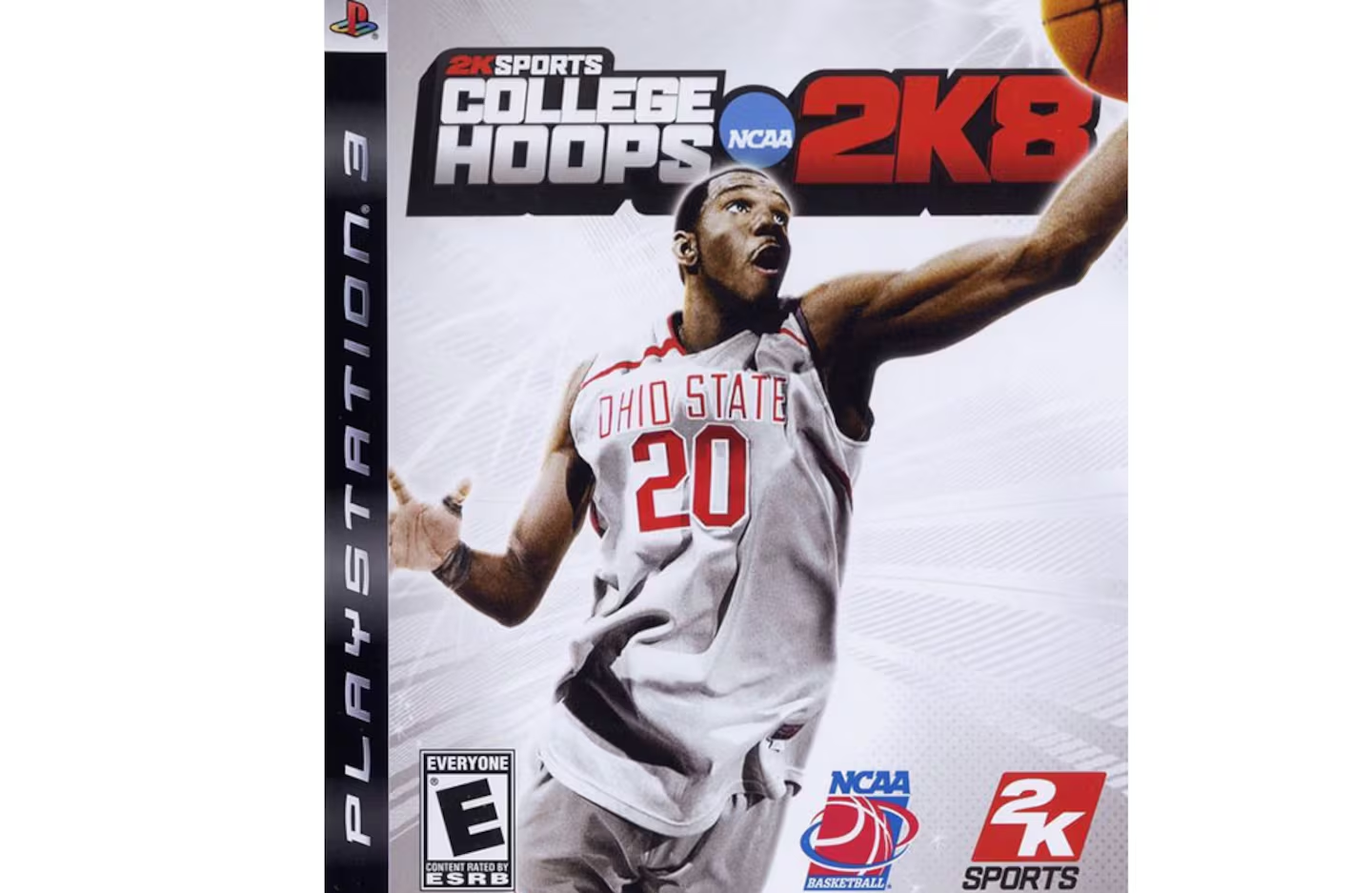
Quick Take: 2K Sports plans their first college basketball game since College Hoops 2K8, creating direct competition with EA’s upcoming title.
Sports Business Journal confirmed that 2K Sports is developing a standalone college basketball game featuring over 100 men’s and women’s programs. According to SBJ’s reporting, Michigan State, UCLA, and Houston are rumored to be “in the mix,” with teams receiving “fair market value” for their NIL usage.
📊 Data Moment: According to Circana Executive Director Mat Piscatella, the College Hoops 2K franchise ranked “outside the top 10 best-selling basketball video game franchises” for lifetime sales. The final game, College Hoops 2K8, was the ninth best-selling basketball game of 2007 and No. 199 overall.
The announcement followed EA Sports’ June 30 social media post about returning to college basketball. 2K Sports responded hours later with a cryptic message: “The campus has been quiet for too long,” accompanied by a smirk emoji.
🎯 Reality Check: 2K Sports discontinued their college basketball series following former UCLA star Ed O’Bannon’s lawsuit against the NCAA for use of NIL, which ended college sports video games for years until rule changes permitted student-athlete participation.
EA Sports’ Football Success Sets Market Expectations
Quick Take: College Football 25’s performance demonstrated significant consumer demand for authentic college sports gaming experiences.
EA Sports’ return to college athletics generated substantial numbers that validated the market opportunity. College Football 25 attracted 6.5 million unique players and became “the top-selling sports game ever released in the U.S.,” according to tracking firm Circana. Sports Business Journal calculated that EA brought in more than $400 million in sales from the game.
💡 Insight Box: The College Licensing Company (CLC) put out a request for proposal to create a college basketball video game in November 2024. According to Extra Points’ Matt Brown, five companies expressed formal interest and three filed formal bids. The CLC recommended that conferences accept EA Sports’ proposal for a 2028 release.
This regulatory framework means multiple games can potentially coexist, as publishers can secure individual program agreements rather than requiring exclusive conference deals through the CLC process.
📱 Shareable Quote: “Fair market value” NIL payments to over 100 programs represents direct athlete compensation that wasn’t possible during the original College Hoops 2K era.
NIL Rule Changes Enable Gaming Industry Return
Quick Take: Updated regulations converted college sports gaming from legal risk into viable entertainment partnerships benefiting multiple stakeholders.
The Ed O’Bannon lawsuit created a legal environment where publishers couldn’t use player likenesses without compensation, effectively ending college sports gaming after 2008. Current NIL rules now permit student-athletes to benefit from licensing deals, enabling EA’s College Football 25 release in 2024 and opening the door for additional publishers.
🎯 Reality Check: College Football 25 provided the industry’s first major test case for NIL integration in gaming, demonstrating that proper athlete compensation structures can work at scale across hundreds of programs and thousands of student-athletes.
2K Sports’ commitment to paying programs “fair market value” indicates understanding that authentic college gaming experiences require official athlete participation rather than generic roster alternatives that characterized some previous workaround attempts.
The timing suggests both publishers recognized the same market opportunity created by regulatory changes, leading to simultaneous development announcements despite years of market absence.
Competitive Landscape Creates Multiple Development Approaches
Quick Take: Two major publishers entering college basketball creates different strategic timelines and potentially distinct gaming experiences.
EA Sports and 2K Sports bring different technical capabilities and industry relationships to college basketball development. EA’s FIFA and Madden expertise provides sports simulation experience, while 2K’s NBA 2K franchise demonstrates basketball-specific gameplay mechanics and presentation approaches.
📊 Data Moment: EA’s proposed 2028 release timeline, as reported by Extra Points, creates a multi-year development window. 2K Sports has not announced their release timeline, potentially allowing earlier market entry if development proceeds more quickly.
The competitive environment also affects participating schools and student-athletes. Multiple publishers seeking program partnerships could influence NIL compensation rates and create additional options for athletic departments considering licensing agreements.
💡 Insight Box: According to the source reporting, 2K’s game would be standalone rather than downloadable content or expansion of NBA 2K, indicating significant development investment rather than supplementary content creation.
Market Validation for College Sports Entertainment
Quick Take: Publisher investment in college basketball gaming reflects broader recognition of amateur athletics as commercially viable entertainment content.
The simultaneous entry of EA Sports and 2K Sports into college basketball gaming validates amateur sports as entertainment properties worth substantial development investment. This extends beyond gaming into broader media and sponsorship opportunities targeting collegiate athletics audiences.
College Football 25’s success, as measured by Circana’s sales tracking and EA’s player engagement numbers, provided market proof that consumer demand exists for authentic college sports experiences when legal frameworks permit proper athlete compensation.
🎯 Reality Check: The gaming industry’s return to college sports coincides with broader changes in amateur athletics, including conference realignment, media rights negotiations, and expanded NIL opportunities across multiple sports and competition levels.
Both publishers’ college basketball plans suggest sustained rather than experimental investment in collegiate gaming properties, indicating industry confidence in long-term market viability rather than short-term trend following.
Closing
The competition between 2K Sports and EA Sports in college basketball gaming represents broader transformation in how entertainment companies approach amateur athletics as commercial properties. EA’s College Football 25 success, generating over $400 million in sales and attracting 6.5 million players, demonstrated significant market demand for authentic college sports experiences.
For collegiate athletics stakeholders, this competition creates new revenue opportunities through NIL partnerships while providing student-athletes additional platforms for building personal brands and earning compensation. The regulatory changes that enabled these games reflect fundamental shifts in amateur sports economics.
The next several years will determine whether college sports gaming develops into sustained competition between multiple publishers or if market dynamics favor consolidation around fewer products. Either outcome represents substantial growth in collegiate sports business opportunities that didn’t exist during the pre-NIL legal environment.
YSBR provides this content on an “as is” basis without any warranties, express or implied. We do not assume responsibility for the accuracy, completeness, legality, reliability, or use of the information, including any images, videos, or licenses associated with this article. For any concerns, including copyright issues or complaints, please contact YSBR directly.

