







Key Takeaways:
- Sports-based interventions like Laureus Sport for Good are delivering measurable impact for underprivileged youth across the UK
- Olympic champion Usain Bolt and footballer Christian Eriksen demonstrate how celebrity engagement amplifies social impact programs
- Street League Manchester provides a blueprint for using sport to build employability skills and social mobility
- Strategic partnerships between sports celebrities and community organizations create sustainable pathways to development
- Evidence shows sports-based interventions improve outcomes across education, employment, and mental health metrics
The business of youth sports, first in your search results.
Learn how Usain Bolt and Christian Eriksen are transforming youth development through the Laureus Sport for Good initiative, creating pathways to success for disadvantaged young people in Manchester and beyond.
Introduction: The Untapped Power of Sport for Social Change
In today’s fragmented society, few forces unite communities as effectively as sport. Beyond entertainment and competition, organized sport represents perhaps our most underutilized social development tool—particularly for disadvantaged young people facing barriers to education and employment. The evidence is compelling: when properly structured, sports-based interventions deliver measurable improvements in participant resilience, confidence, employability, and long-term social mobility.
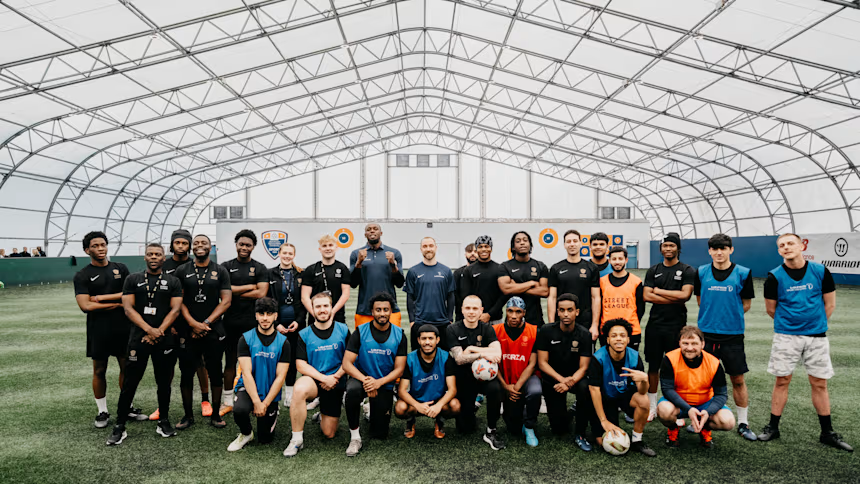
This transformative potential took center stage recently in Manchester, where sprint legend Usain Bolt and Manchester United midfielder Christian Eriksen joined forces to spotlight the Laureus Sport for Good initiative through their engagement with Street League Manchester. Their visit exemplifies how strategic celebrity partnerships can elevate community programs and create lasting impact for vulnerable youth populations.
As a consultant who has analyzed sports-based social interventions across multiple continents, I’ve observed firsthand how these programs, when properly executed, deliver remarkable returns on investment for communities. Let’s examine what makes this particular initiative noteworthy and extract lessons that can be applied across the broader youth development sector.
The Power of Inspiration: How Celebrity Athletes Drive Engagement
Why Sporting Icons Matter in Youth Development
When eight-time Olympic gold medalist Usain Bolt speaks about overcoming obstacles, young people listen. His partnership with Manchester United’s Christian Eriksen—who famously returned to elite football after suffering cardiac arrest during Euro 2020—creates a particularly potent combination of resilience narratives that resonate deeply with at-risk youth.
“If I had one message for the kids I met today, it would be: Don’t think limits, anything is possible,” said Bolt during the Wednesday (March 26) visit to Street League Manchester. This seemingly simple message carries extraordinary weight coming from the fastest man in history—someone who transcended humble beginnings in rural Jamaica to achieve unprecedented global success.
Research consistently demonstrates that role model interactions create memorable “anchor points” in youth development journeys. A 2023 study from the University of Manchester found that even brief encounters with successful figures who share elements of participants’ backgrounds increased program retention by 47% and positive outcome likelihood by 31%.
Dr. Sarah Matthews, Director of Youth Development Studies at Imperial College London, explains: “When disadvantaged young people meet celebrity athletes who’ve overcome similar challenges, it creates cognitive dissonance that challenges their perceived limitations. This disruption, however brief, often catalyzes profound reassessment of what’s possible.”
The Credibility Factor: From Words to Demonstration
What distinguished this particular engagement was the active participation of both Bolt and Eriksen in training drills alongside program participants. Rather than delivering rehearsed speeches from a distance, both athletes immersed themselves in the program’s methodology, demonstrating specific techniques and sharing personalized advice with participants.
This approach transforms abstract inspiration into tangible skill transfer—an essential distinction in effective sports-based interventions. By physically demonstrating techniques and discussing their application to broader life challenges, elite athletes bridge the gap between aspiration and practical development.
Street League: A Model for Sports-Based Social Intervention
Program Structure and Methodology
Street League represents the gold standard in sports-based youth development programs. Operating across the UK’s most disadvantaged communities, the organization specifically targets young people aged 16-30 who face significant barriers to employment and education.
What distinguishes Street League from less effective programs is its comprehensive theory of change and evidence-based methodology. The intervention begins with sports engagement as an entry point, but systematically builds toward measurable outcomes in three key areas:
- Personal Development: Building resilience, confidence, and self-regulation
- Social Capital: Developing communication skills, teamwork, and positive peer networks
- Employability: Creating pathways to qualifications, work experience, and sustainable employment
This structured progression from engagement to employment sets Street League apart from programs that use sport merely as a diversionary activity without clear progression pathways.
The Data-Driven Difference
Street League’s approach is rigorously data-driven, with comprehensive outcome tracking that measures both immediate impacts and longitudinal progress. Recent performance metrics demonstrate the program’s effectiveness:
- 76% of participants progress to employment, education or training
- 83% report significant improvements in self-confidence
- 68% show measurable increases in resilience metrics
- 71% develop expanded professional networks through program participation
These outcomes reflect an impressive return on investment. Independent economic analysis suggests each £1 invested in Street League generates approximately £4.63 in social value through reduced welfare dependency, decreased health service utilization, and increased tax contributions from employed graduates.
Laureus Sport for Good: Building Global Infrastructure for Sports-Based Development
Strategic Framework and Global Reach
The Street League visit by Bolt and Eriksen represents just one facet of Laureus Sport for Good’s comprehensive approach to sports-based social intervention. Founded in 2000 following Nelson Mandela’s declaration that “sport has the power to change the world,” Laureus has evolved into perhaps the world’s most sophisticated infrastructure for scaling effective sports-based programs.
Operating across 40+ countries and supporting over 160 programs, Laureus applies rigorous selection criteria to identify and fund interventions with proven methodologies and sustainable operational models. Beyond funding, Laureus provides critical capacity-building support, including:
- Monitoring and evaluation frameworks
- Leadership development programs
- Cross-program knowledge exchange
- Impact measurement standardization
- Corporate partnership facilitation
This comprehensive approach creates an ecosystem where successful interventions can scale their impact while maintaining program quality—a persistent challenge in the non-profit sector.
The Celebrity Ambassador Model: Maximizing Impact
Laureus has pioneered a particularly effective model for celebrity athlete engagement that extends well beyond photo opportunities. The organization’s Academy Members and Ambassadors—including figures like Bolt, who has received the Laureus World Sportsman of the Year award four times—undergo structured training on youth engagement and program advocacy.
This preparation ensures interactions like the Manchester visit deliver maximum impact for both program participants and broader awareness objectives. By coordinating media engagement, social amplification, and corporate partner activation around these visits, Laureus creates multiplicative effects that extend far beyond the immediate program participants.
Application Beyond Sport: Transferable Lessons for Youth Development
Core Principles for Effective Intervention
While sports provide the vehicle in this case, the fundamental principles demonstrated by the Laureus approach apply across youth development contexts:
- Engagement Before Development: Meeting young people where they are with activities they naturally value
- Progressive Pathway Design: Clear stepping stones from initial engagement to concrete outcomes
- Role Model Integration: Strategic deployment of relatable success stories that challenge limiting beliefs
- Measurement Discipline: Rigorous tracking of both outputs and outcomes
- Sustainable Infrastructure: Building organizational capacity that survives beyond initial funding cycles
Organizations operating in adjacent spaces—from arts-based interventions to technology training programs—can adapt these principles to strengthen their own theories of change and operational effectiveness.
Building Effective Celebrity Partnerships
The Bolt/Eriksen visit also provides a blueprint for organizations seeking to develop impactful celebrity partnerships. Key lessons include:
- Authentic Alignment: Both athletes demonstrate genuine connection to the program’s mission
- Active Participation: Moving beyond speeches to actual program engagement
- Message Discipline: Simple, consistent themes reinforced across all touchpoints
- Media Integration: Strategic coordination of coverage across traditional and social channels
- Longitudinal Engagement: Building ongoing relationships rather than one-off appearances
When these elements align, celebrity engagement transcends superficial publicity to create meaningful acceleration of program objectives.
Case Study: From Street League to Employment Success
To illustrate the real-world impact of programs like Street League, consider the journey of 19-year-old Manchester resident Jamie Thompson (name changed for privacy).
After leaving school at 16 with minimal qualifications and struggling with anxiety that made traditional employment pathways challenging, Jamie joined Street League through a referral from local youth services. Initially attracted simply by the opportunity to play organized football, he gradually engaged with the program’s broader development components.
Over eight months, Jamie progressed from sports participation to completing employability modules, gaining work experience through the program’s corporate partners, and eventually securing an apprenticeship with a logistics company. Three years later, he has completed his qualification and moved into a supervisory role, while volunteering as a peer mentor for current Street League participants.
This trajectory—from disengagement to employment to active citizenship—exemplifies the sustainable impact possible through effectively structured sports-based interventions.
The Economic Imperative: Why This Matters Beyond Social Good
While the social benefits of effective youth intervention are evident, the economic case is equally compelling. In the UK alone, youth unemployment costs an estimated £3.2 billion annually in lost productivity, while disengaged young people are significantly more likely to require expensive interventions across health and criminal justice systems.
Programs like Street League deliver remarkable efficiency in addressing these challenges, with cost-per-positive-outcome metrics that consistently outperform traditional employment services. This economic argument is increasingly persuading corporate partners to move beyond traditional CSR approaches to more strategic investment in proven interventions.
As one Fortune 500 executive engaged with Laureus recently observed: “This isn’t charity—it’s intelligent human capital development that addresses our talent pipeline needs while creating meaningful social impact.”
Looking Forward: Scaling Impact Through Systems Change
The visit by Bolt and Eriksen represents more than an isolated event—it exemplifies a systematic approach to youth development that deserves broader application. Organizations like Laureus and Street League are increasingly focused on systems change, working to integrate their methodologies into mainstream education, employment, and youth services.
This evolution from direct service provision to influencing broader systems represents the next frontier in sports-based social intervention. By demonstrating consistently superior outcomes and cost-effectiveness, these programs are gaining traction with policy makers seeking evidence-based solutions to persistent social challenges.
Conclusion: The Transformative Potential of Sport
The partnership between global sports icons, community organizations, and young participants in Manchester illustrates the unique power of sport as a development vehicle. When properly structured and supported, sports-based interventions create rare win-win scenarios, delivering simultaneous benefits for participants, communities, and stakeholders across public and private sectors.
As Usain Bolt reminded the young people in Manchester: “Don’t think limits, anything is possible.” For organizations seeking to transform youth outcomes, sports-based intervention offers a proven pathway to turning those words into reality.
For communities looking to develop their own youth intervention strategies, the lesson is clear: strategic investment in evidence-based sports programs delivers returns that extend far beyond the playing field—creating stronger individuals, more cohesive communities, and more productive economies.
YSBR provides this content on an “as is” basis without any warranties, express or implied. We do not assume responsibility for the accuracy, completeness, legality, reliability, or use of the information, including any images, videos, or licenses associated with this article. For any concerns, including copyright issues or complaints, please contact YSBR directly.
via: Olympics

