





Key Takeaways
- Dakar 2026 will be a historic first as Africa hosts its inaugural Olympic sporting event, representing a watershed moment for global sports development.
- The Dakar 2026 Learning Academy has launched its first cohort, training over 400 young professionals in event management for long-term capacity building across Africa.
- The venue master plan has been finalized, including an iconic road cycling route along Dakar’s scenic Corniche Ouest, with significant construction progress reported.
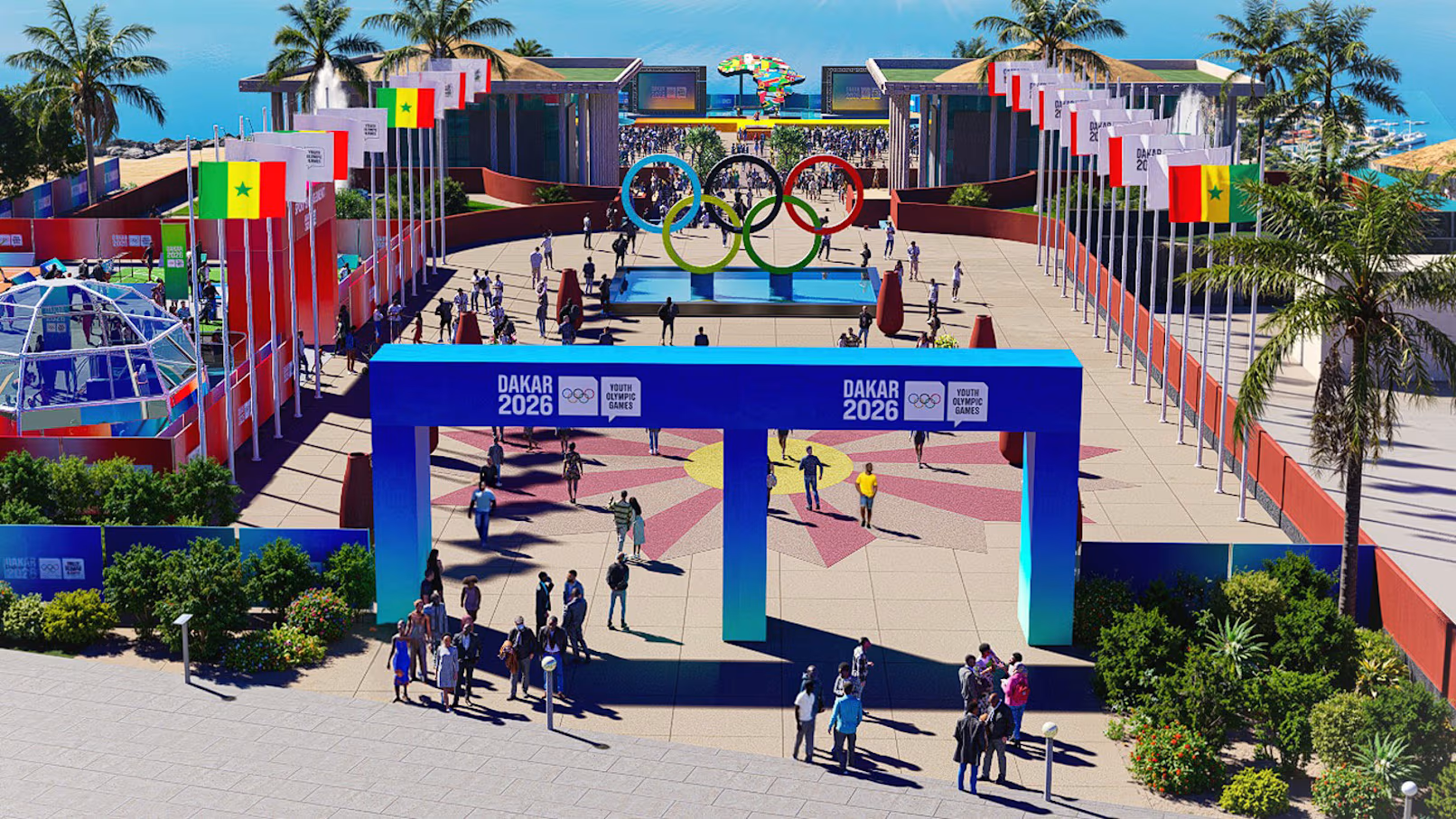
- The Corniche de Dakar will host “Espace Let’s Move”, a dynamic hub for celebration featuring engagement sports, cultural activities, and educational programming.
- Operational readiness is accelerating as the organizing committee transitions to its Games-time structure with less than 18 months until the event begins.
Introduction: A Historic Moment for African Sport
The Olympic Movement is on the cusp of a transformative milestone. For the first time in Olympic history, the African continent will host an Olympic sporting event—the Youth Olympic Games (YOG) Dakar 2026. With less than 18 months until the opening ceremony, preparations are intensifying across operational, infrastructural, and legacy dimensions, bringing this groundbreaking event closer to reality.
The significance of this moment extends far beyond sport. As IOC President Thomas Bach emphasized, “Dakar 2026 will be a moment for Africa to shine on the global stage.” This historic occasion represents not only an opportunity to showcase elite young athletes but also a platform for Senegal to demonstrate its organizational capabilities and share its cultural heritage with the world through the legendary spirit of “teranga” (hospitality).
The recent seventh meeting of the International Olympic Committee’s Coordination Commission, held in hybrid format with key stakeholders participating both on-site in Dakar and remotely, marked another critical milestone in the Games’ preparation journey. The discussions revealed encouraging progress while highlighting the work that remains to be done as the countdown continues.
Leadership Transition: New Direction with Continued Vision
The Coordination Commission has undergone strategic leadership changes while maintaining continuity of vision. Newly appointed Chair Humphrey Kayange, a former Kenyan rugby sevens star and IOC member, has assumed leadership of the Commission, bringing fresh energy and perspective to the Games’ oversight.
IOC President-elect Kirsty Coventry’s on-site participation underscored the strategic importance of Dakar 2026 within the broader Olympic Movement. The appointment of IOC Vice-President Nawal El Moutawakel as Vice-Chair ensures continuity, as she has been instrumental in guiding the Commission since its inception.
This leadership structure combines fresh perspectives with institutional knowledge, creating an ideal framework for supporting the Dakar 2026 Organizing Committee (YOGOC) through the critical final phase of preparations.
Building Human Capital: The Dakar 2026 Learning Academy
One of the most significant developments highlighted during the Commission meeting was the official launch of the Dakar 2026 Learning Academy—a transformative initiative with implications far beyond the Games themselves.
Investing in Africa’s Future Event Leaders
The Learning Academy represents a strategic investment in building human capital across Senegal and the broader African continent. Designed to train and recruit over 400 young professionals aged 21 to 35, the Academy provides structured development in Games management and operations.
This initiative addresses multiple objectives simultaneously:
- Creating an immediate talent pipeline for the Organizing Committee
- Building long-term event delivery capacity across the continent
- Providing career development opportunities for Senegalese youth
- Establishing a sustainable legacy in sports management expertise
The first cohort of participants has already begun their training journey, learning essential skills that will enable them to contribute directly to Games delivery while developing transferable capabilities for future major sporting events.
Beyond Dakar 2026: Regional Expertise Development
The Academy’s impact will extend well beyond the Youth Olympic Games. By creating a cadre of trained professionals with hands-on Olympic event experience, Senegal is positioning itself as a regional hub for sports event management expertise. This human capital development represents one of the most enduring legacies the Games will leave.
As major sporting events increasingly look to new regions for hosting opportunities, the presence of locally trained event professionals will enhance Africa’s competitiveness in bidding for and delivering international competitions in the future.
Venue Development: From Plans to Reality
The finalization of the venue master plan represents another crucial milestone in the Games’ preparation. With the confirmation of the road cycling route, which will start and finish along Dakar’s picturesque Corniche Ouest, all competition venues have now been determined.
Strategic Venue Distribution
The YOG Dakar 2026 will utilize venues across three host sites:
- Dakar – The capital city will host multiple sports and serve as the central hub for Games activities
- Diamniadio – This growing urban center will feature several key competition venues
- Saly – This coastal resort area will host water sports and beach competitions
This distribution strategy balances operational efficiency with the opportunity to showcase different regions of Senegal, while managing the logistics of athlete transportation and accommodation.
Construction Progress and Readiness
The Coordination Commission received positive updates regarding construction progress across key venues. While specific completion percentages weren’t detailed, the general assessment indicates venues are advancing according to schedule, with increasing alignment between physical infrastructure development and operational planning.
The transition from planning to implementation phase has accelerated, with venue designs now being realized in concrete form. This tangible progress provides increasing confidence in Senegal’s ability to deliver the required infrastructure on time.
Creating a Festival Atmosphere: The Corniche Experience
Beyond competition venues, the Dakar 2026 experience will feature vibrant celebration zones that capture the essence of the Youth Olympic Games—blending sport with culture, education, and entertainment.
Espace Let’s Move: The Heart of Dakar 2026
The Corniche de Dakar—the iconic coastal promenade that defines the city’s relationship with the Atlantic Ocean—will be transformed into “Espace Let’s Move,” the central hub for celebration and youth engagement during the Games.
This dynamic zone will feature:
- Engagement sports for public participation
- Cultural performances and exhibitions
- Educational workshops on Olympic values
- Health and nutrition programming
- Interactive activities and demonstrations
- Live entertainment and local culinary offerings
Organized in partnership with national sports federations and local cultural organizations, Espace Let’s Move embodies the YOG philosophy of engaging young people beyond competition. The festival-like atmosphere will create an inclusive environment that welcomes families and youth of all backgrounds into the Olympic experience.
Dakar en Jeux 2025: The Final Dress Rehearsal
In preparation for the Games, the “Dakar en Jeux” festival will return for its fourth and final edition from November 3-9, 2025. This week-long celebration serves as both a promotional platform and an operational test event, bringing together elements of sport, culture, education, and health.
The 2025 edition will be particularly significant as the final major public-facing event before the Games, offering organizers a critical opportunity to test concepts, train staff, and build public engagement in the year preceding the YOG.
Operational Readiness: The Shift to Delivery Mode
With less than 18 months until the opening ceremony on October 31, 2026, the Coordination Commission emphasized the importance of transitioning from planning to operational delivery. This pivot represents one of the most challenging phases for any organizing committee.
Evolving Organizational Structure
The YOGOC is actively evolving into its Games-time structure, adapting its organizational design to match the changing requirements of the delivery phase. This transition involves:
- Expanding operational teams
- Finalizing roles and responsibilities
- Establishing command structures
- Testing decision-making processes
- Implementing monitoring and control systems
Humphrey Kayange, Chair of the Coordination Commission, noted: “With less than 18 months to go, we are entering the final stretch. These past two days have been incredibly valuable, filled with constructive exchanges that have helped us build a clear picture of where we stand. The momentum that’s been built gives us confidence as we move forward towards delivering extraordinary Games for Africa.”
Comprehensive Functional Planning
The Commission reviewed progress across all operational areas, including:
- Technology infrastructure and systems
- Ticketing strategy and implementation
- Games services for athletes and delegations
- Marketing and sponsorship activation
- Security planning and coordination
- Athlete education programs
- Youth engagement initiatives
The assessment indicates advancement across these domains since the previous Commission meeting in November 2024, with particular emphasis on the need to maintain momentum and address any remaining gaps in the transition to operational readiness.
The Co-Creation Model: A Partnership Approach
A distinctive feature of the Dakar 2026 preparation process has been the collaborative “co-creation” model established between the IOC and local organizers. This approach represents an evolution in Olympic Games preparation, particularly for new host regions.
Shared Expertise and Responsibility
Ibrahima Wade, General Coordinator of the YOGOC, highlighted this partnership approach: “The spirit of co-creation between the IOC and Dakar 2026 that has been present so far is evident once again.” This model leverages IOC expertise and resources while respecting local leadership and context.
The co-creation approach involves:
- Regular knowledge transfer from the IOC
- Adaptation of Olympic standards to local conditions
- Shared problem-solving and decision-making
- Capacity building for the local organizing team
- Mutual commitment to Games success
This collaborative model provides a potential template for future Olympic events in regions with less experience hosting major international sporting competitions, making the Dakar 2026 experience valuable not only for Senegal but for the Olympic Movement’s global development.
Legacy Planning: Beyond the 14 Days of Competition
While operational readiness remains the immediate priority, the Coordination Commission and YOGOC maintained focus on legacy planning—ensuring the Games create lasting benefits for Senegalese youth, sport, and society.
Youth Development Through Sport
The core legacy vision centers on youth development, with initiatives designed to:
- Increase sports participation across Senegal
- Improve access to sporting facilities
- Enhance physical education programming
- Develop coaching and officiating expertise
- Create pathways from grassroots to elite competition
These youth-focused efforts align with the fundamental purpose of the Youth Olympic Games as a platform for developing not just athletic talent but also values-based education and healthy lifestyles.
Infrastructure and Urban Development
Beyond sport-specific benefits, the Games are catalyzing broader infrastructure improvements, particularly in the host areas of Dakar, Diamniadio, and Saly. Transportation connections, public spaces, telecommunications, and hospitality facilities are all receiving upgrades that will benefit residents and visitors long after the Games conclude.
Conclusion: The Road to a Historic Milestone
As preparations for Dakar 2026 intensify, the vision of Africa’s first Olympic event is increasingly becoming reality. The progress reported during the seventh Coordination Commission meeting reflects growing confidence in Senegal’s ability to deliver a successful Youth Olympic Games while creating meaningful legacy outcomes.
IOC President Thomas Bach captured the significance of this journey: “Dakar 2026 will welcome young athletes from around the world to celebrate sport, culture and the legendary Senegalese spirit of teranga.” This celebration represents both a culmination of years of preparation and the beginning of a new chapter in the Olympic Movement’s global evolution.
For the African continent, Dakar 2026 offers an unprecedented platform to showcase its capabilities in hosting world-class sporting events. For Senegalese youth, the Games provide inspiration, opportunity, and tangible pathways for development through sport. And for the global Olympic Movement, this historic milestone expands its reach to the only continent that has yet to host an Olympic event.
As the countdown to October 31, 2026, continues, all stakeholders remain focused on the shared goal of delivering extraordinary Youth Olympic Games that honor Africa’s debut on the Olympic hosting stage.
Actionable Recommendations
- For Sport Federations: Engage proactively with the Dakar 2026 Organizing Committee to ensure sport-specific requirements are fully integrated into operational planning while exploring opportunities to develop coaching and officiating capacity in the region.
- For Corporate Partners: Consider early activation strategies that connect with Senegalese youth culture and values, potentially leveraging the Dakar en Jeux 2025 festival as a platform for initial engagement.
- For National Olympic Committees: Begin preparing young athletes not just for competition but for the cultural exchange opportunities unique to Africa’s first Olympic event, including educational programming about Senegalese history and culture.
- For Tourism Stakeholders: Develop specialized Olympic visitor packages that combine Games attendance with broader exploration of Senegalese cultural sites and experiences, while ensuring adequate accommodation capacity.
- For Media Organizations: Invest in understanding the cultural and historical significance of this milestone event, potentially through advance visits and relationship-building with local partners to enhance coverage depth.
YSBR Legal Disclaimer: The information provided in this article is for general informational purposes only and should not be construed as professional advice. This content is based on publicly available information from the International Olympic Committee and Dakar 2026 Organizing Committee. Event details, including dates, venues, and programs, may be subject to change. Readers planning to attend or participate in Dakar 2026 activities should consult official sources for the most current information. YSBR is not affiliated with the International Olympic Committee or the Dakar 2026 Organizing Committee.

